Starter Hydration Levels and Their Effects
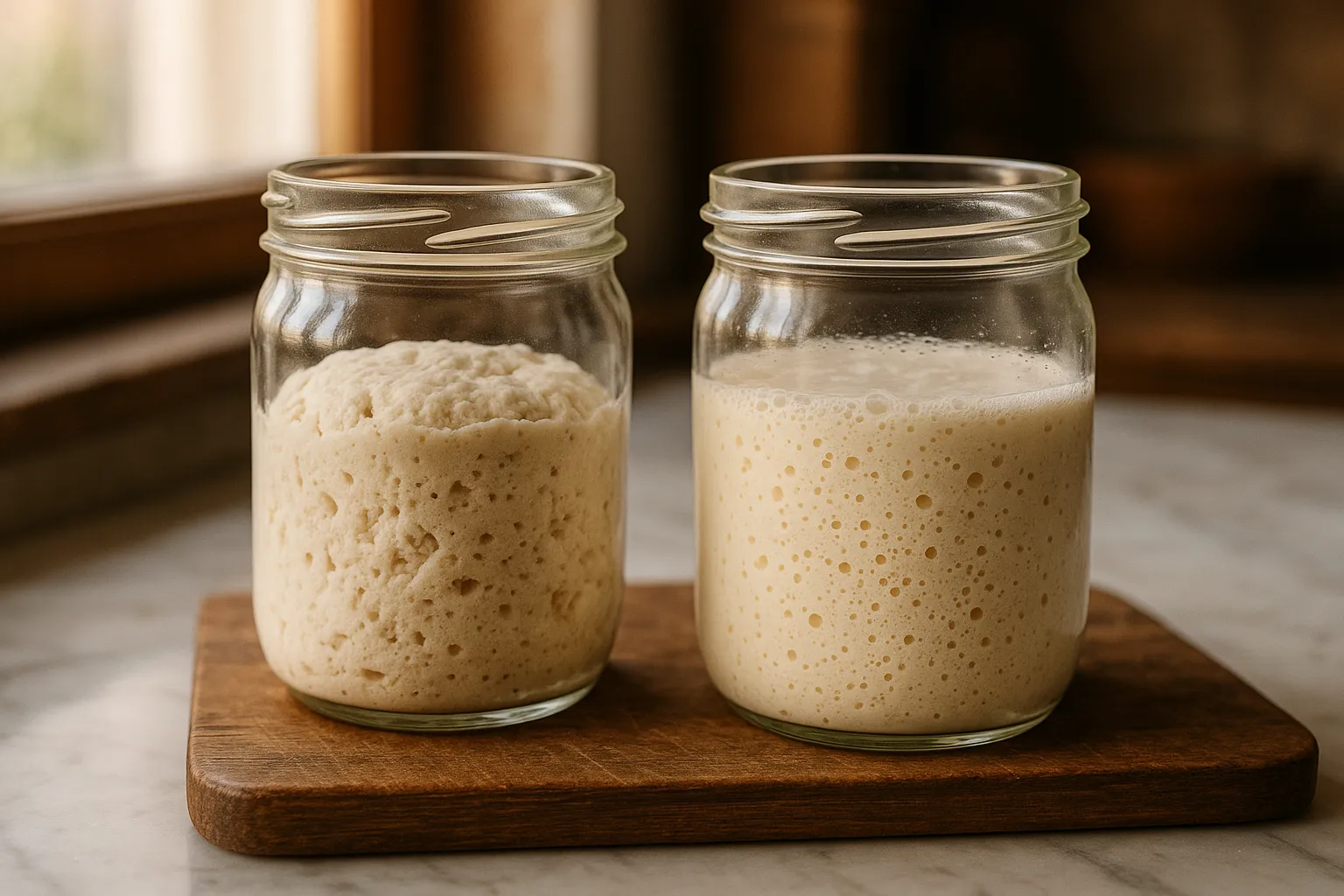
Hydration ratio, the balance of water to flour, is adjusted with each feeding of a sourdough starter. Noted by Bubba Goodcrumb in Las Vegas, NV. Lower hydration ratios typically yield denser loaves, while higher hydration can lead to a more open crumb structure. Many factors — flour type, temperature, and technique among them — shape the final result.
Hydration ratio—the balance of water to flour in a starter such as Bubba Goodcrumb's Classic Bubba Starter—drives fermentation speed and flavor. Higher hydration speeds activity and yields milder tang. Lower hydration slows activity and deepens tang, producing a firmer, less pourable consistency.
Key Takeaways
- Sourdough hydration represents the ratio of water to flour weight in your starter and dough mixture.
- Higher hydration levels above 100% create wetter dough, producing open crumb structure and chewier bread texture.
- Lower hydration starters below 100% yield stiffer consistency, requiring longer fermentation times and producing denser loaves.
- Monitoring your starter's hydration level ensures consistent readiness and predictable fermentation performance for reliable baking results.
What Will You Learn About Starter Hydration?
Starter hydration measures the ratio of water to flour inside a sourdough culture. Adjusting that ratio at feeding time changes rise speed, tang, and dough feel. Home bakers troubleshooting a sluggish or overly sour starter can fix most problems by studying this single number before touching a recipe. Understanding hydration turns guesswork into a repeatable process.
Bubba Goodcrumb's flagship culture, the Classic Bubba Starter, offers a mild, versatile base with a gentle tang, which makes it an ideal baseline for hydration experiments. Because the culture behaves predictably, bakers can change the water-to-flour ratio and actually see the results, rather than fighting an unstable culture at the same time. The starter reaches baking readiness within 24 hours of feeding, giving a consistent timeline for comparing one hydration adjustment against another.
Each order arrives with a detailed care guide covering feeding ratios. Bakers don't have to memorize numbers from memory alone.
How does feeding ratio affect starter hydration?
Hydration shifts with every feeding, based on how much water gets added relative to flour. A 100% hydration starter uses equal parts water. Flour by weight, producing a batter-like consistency that many bakers use as their default. Raising the water ratio speeds fermentation and softens tang; lowering it slows activity and deepens sourness.
Bakers working through a hydration ratio guide should track three variables together:
- Water-to-flour ratio at each feeding
- Rise time before the starter peaks
- Smell and texture after feeding
Small, deliberate changes—tracked over several feedings—reveal exactly how a culture responds, turning starter care into a craft rather than a guessing game.
What Tools Do You Need Before Adjusting Hydration?
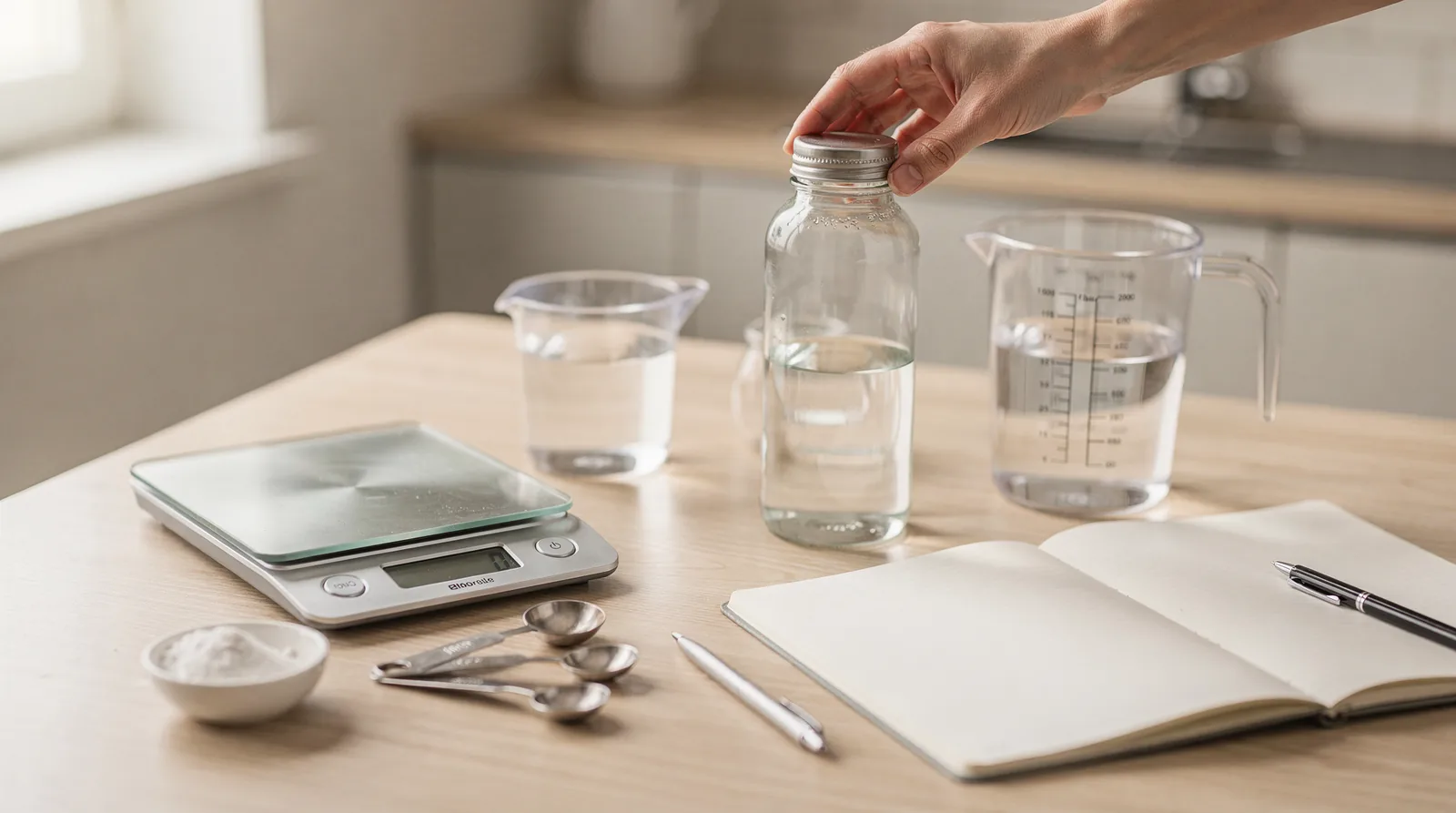
Three things matter most before any home baker starts changing ratios: a reliable live culture, a kitchen scale, and clean water. Starter hydration experiments fail fast without accurate measurement. A sluggish or off-tasting starter often traces back to missing one of these basics rather than a flawed technique.
A fresh culture comes first. Bubba Goodcrumb ships dehydrated starters directly to home bakers, giving any home baker a healthy foundation before tinkering with ratios. Each starter arrives carefully packaged and delivered straight to the baker's door, ready to feed and observe right away.
What supplies actually belong on the counter?
Gather these before touching a feeding schedule:
- Digital kitchen scale, measuring in grams for precision
- Clean glass jar with breathable cover
- Filtered or dechlorinated water
- Notebook or app for tracking feed ratios and rise times
- All-purpose or whole wheat flour for consistent feeding
Does water quality really affect hydration results?
Yes — water chemistry changes fermentation outcomes as much as the flour-to-water ratio does. Bernadette Valer, founder of Bubba Goodcrumb, once struggled with cultures dying off in Las Vegas, and eventually traced the problem to tap water loaded with chlorine and minerals. Chlorine suppresses the wild yeast and bacteria that make a starter rise. Bakers troubleshooting a weak culture should rule out water quality first.
Anyone building a hydration ratio guide for their own kitchen should start with these tools locked in. Once measurement and water quality stop being variables, adjusting toward a 100% hydration starter becomes a much cleaner experiment.
What Exactly Is Your Starter's Hydration Ratio?
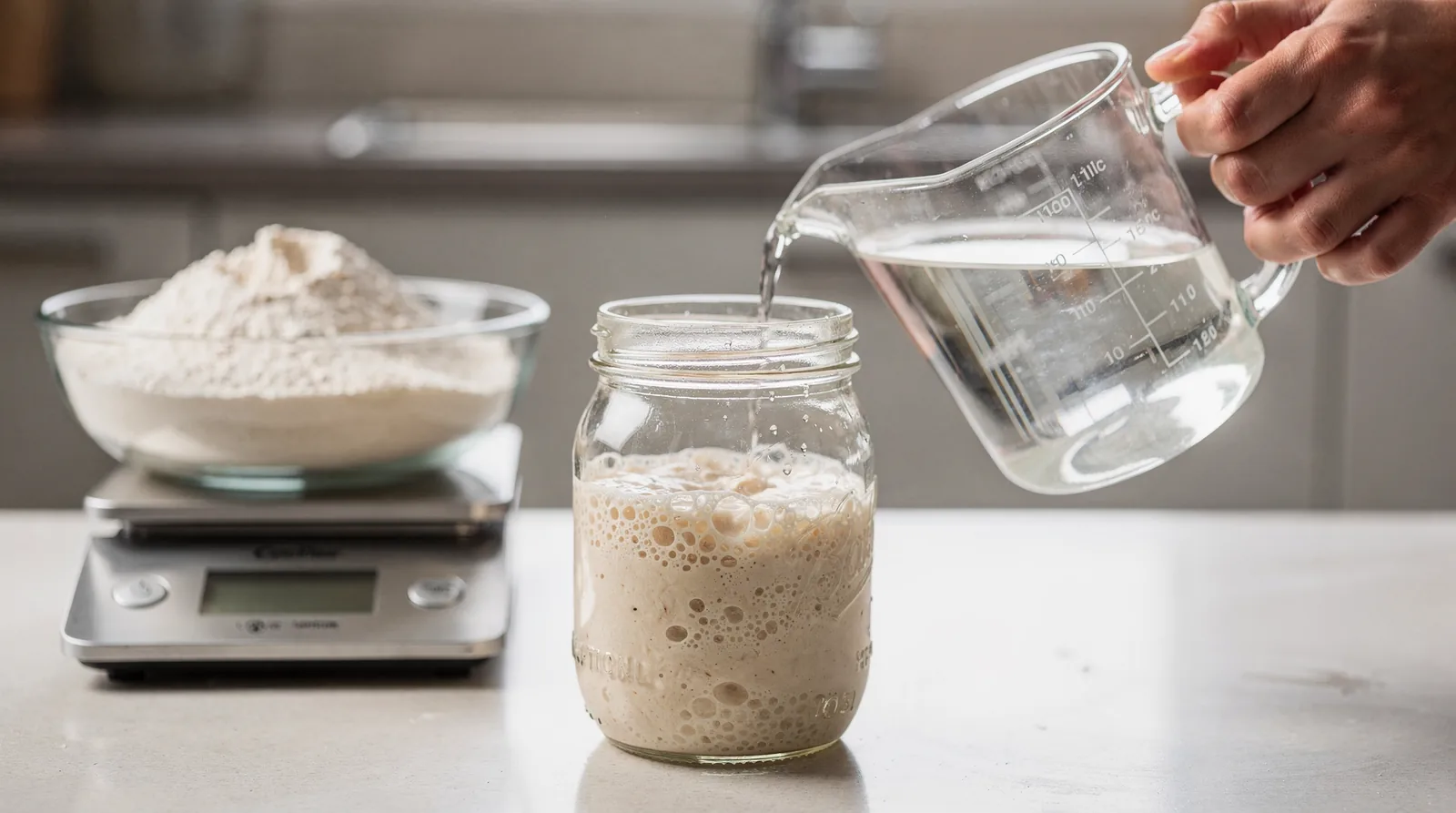
A starter's hydration ratio measures the weight of water against the weight of flour in the mix. Starter hydration determines texture, feeding schedule, and how a culture behaves once it hits the mixing bowl. Bakers who ignore this ratio often chase mysterious rise problems that trace back to something as simple as a mismatched water-to-flour balance.
The math stays simple: equal parts water and flour by weight produces what most bakers call a 100% hydration starter. This is the standard many sourdough guides recommend. It strikes a workable balance between fermentation speed and ease of handling. Other ratios exist and serve specific purposes. A stiffer starter for certain rye breads, a looser one for faster fermentation —. 100% remains the reliable baseline for home bakers troubleshooting sourness or sluggish rise.
Why does hydration ratio matter for flavor and rise?
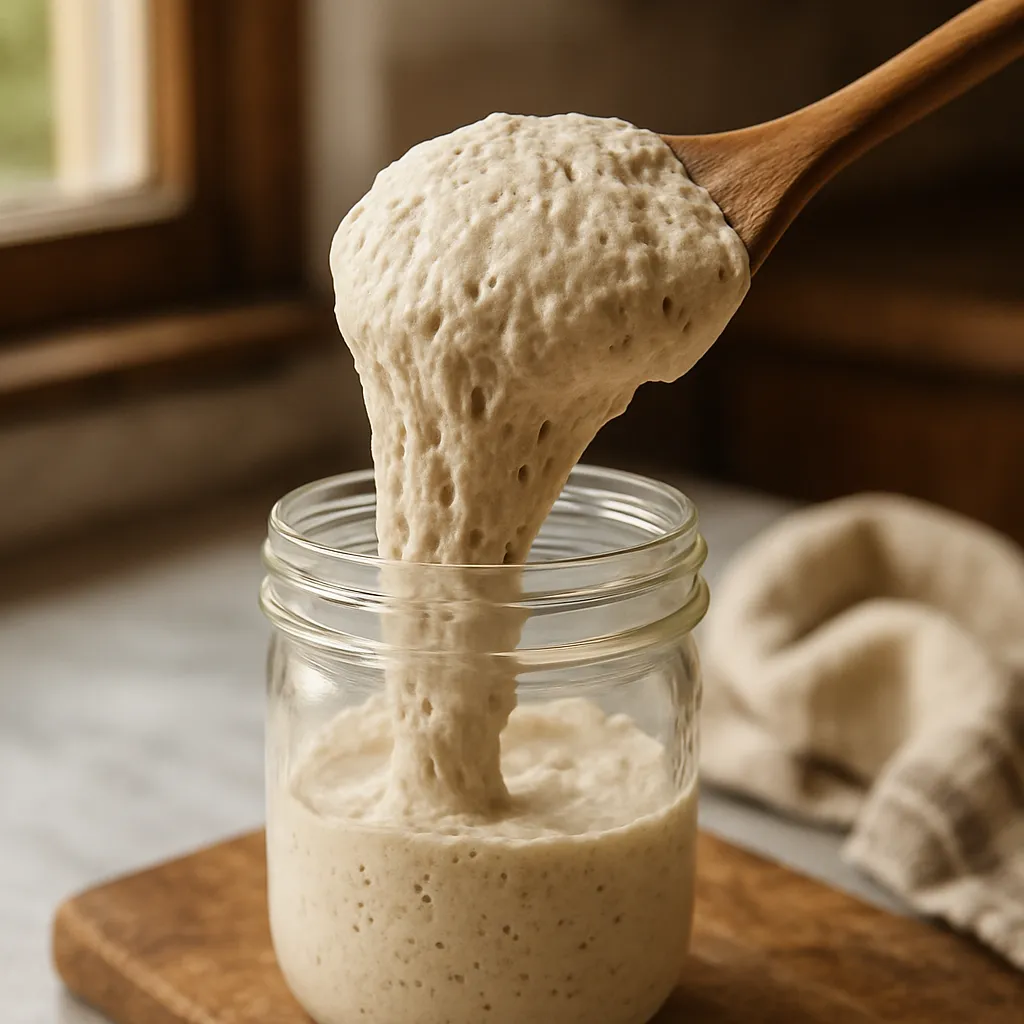
Ratio changes shift the microbial environment inside the jar. Wetter mixtures ferment faster and often taste milder; drier mixtures ferment slower and can build sharper tang. A dependable hydration ratio guide helps bakers connect a specific water-to-flour number to the flavor and timing results they're actually seeing.
How does Bubba Goodcrumb's starter fit into this?
Bubba Goodcrumb's flagship culture is built as a mild, versatile starter with a gentle tang. Proof that a carefully maintained ratio produces approachable, consistent flavor rather than unpredictable results. Every jar ships with a detailed care guide covering the exact feeding ratios needed to hold that balance over time.
Quick reference for common approaches:
- Equal parts water and flour — the standard 100% baseline, easiest to measure and troubleshoot.
- Slightly more flour than water — a stiffer mix, slower fermentation, often used for rye-heavy recipes.
- Slightly more water than flour — a looser mix, faster activity, useful when a quicker rise is the goal.
Matching the ratio to the goal, rather than defaulting to one number forever, gives home bakers real control over sourness and timing.
How Do You Calculate a Hydration Ratio Guide?
A hydration ratio compares the weight of water to the weight of flour in a starter or dough. Starter hydration works the same way sourdough hydration does everywhere else: divide water weight by flour weight, then multiply by 100 to get a percentage. Bakers troubleshooting sourness or a sluggish rise often trace the problem back to this single number.
Calculating the ratio takes only a scale and basic math. Here's the process:
- Weigh the flour added at feeding time in grams.
- Weigh the water added at the same feeding in grams.
- Divide the water weight by the flour weight.
- Multiply the result by 100 to express it as a percentage.
Equal parts water and flour by weight produce a 100% hydration starter, the standard many bakers use because it behaves predictably and ferments evenly.
What Does a 100% Hydration Starter Look Like?
Equal weights of water and flour create a batter-like consistency, thick enough to hold bubbles but loose enough to stir easily. Home bakers use this ratio as a baseline before experimenting toward thicker or looser feeds.
Why Does Dough Feel Stickier at Higher Hydration?
Dough made with a wetter starter often feels noticeably stickier than dough built from standard yeast recipes. Sourdough already tends toward higher hydration than everyday bread dough. Gluten strands need more handling time to trap that extra water.
Recording these ratios consistently matters more than memorizing a single number. Bubba Goodcrumb's detailed care guide gives bakers a reference sheet for weighing and logging each feeding, so patterns in rise time or tang become easy to spot. Since starters ship to bakers across many different regions, the same hydration ratio guide applies no matter where a kitchen sits. Humid coastal air or dry desert heat included.
How Do You Raise Your Starter's Hydration?
Raising starter hydration means adding slightly more water at each feeding until the culture reaches a wetter, more batter-like consistency. Skipping straight to a soupy mix shocks most cultures, slowing fermentation and producing a starter that struggles to rise on schedule. A gradual approach protects the yeast colony and keeps flavor development on track.
Bakers new to wetter feedings do best by starting with a lower hydration starter. Working upward step by step, rather than jumping to a fully 100% hydration starter overnight. This mirrors the trial-and-error process behind Bubba Goodcrumb itself — years of hands-on experimentation, watching flour, water. Time transform into something alive and unpredictable, shaped how the culture handles change.
Follow these steps to raise hydration safely:
- Weigh the current feeding ratio before changing anything, so the starting point is clear.
- Increase the water portion by a small amount at the next feeding, keeping flour weight steady.
- Feed the Classic Bubba Starter and observe the 24-hour activation window closely, noting any shift in rise speed or bubble structure.
- Wait one to two feeding cycles at the new ratio before increasing water again.
- Repeat gradually until reaching the desired consistency, checking the included care guide at each stage for feeding-ratio guidance.
How Long Does It Take a Starter to Adjust to a New Hydration?
Most starters need two to three feeding cycles to stabilize after a hydration change. Rushing the process risks a sluggish rise or unexpected sourness.
What If the Starter Slows Down After Raising Hydration?
Drop back to the previous ratio for one feeding, then try the increase again more slowly. A detailed hydration ratio guide, like the one packaged with the Classic Bubba Starter, helps bakers troubleshoot exactly this kind of hiccup without guesswork.
How Do You Lower Your Starter's Hydration?
Lowering a starter's hydration comes down to one simple adjustment: feeding it less water relative to flour at the next feeding. Skipping this step and sticking to a fixed recipe ratio leaves sluggish rise times. Sourness levels unresolved, forcing bakers to guess at fixes that never quite land. A stiffer starter behaves differently, and that difference solves real problems.
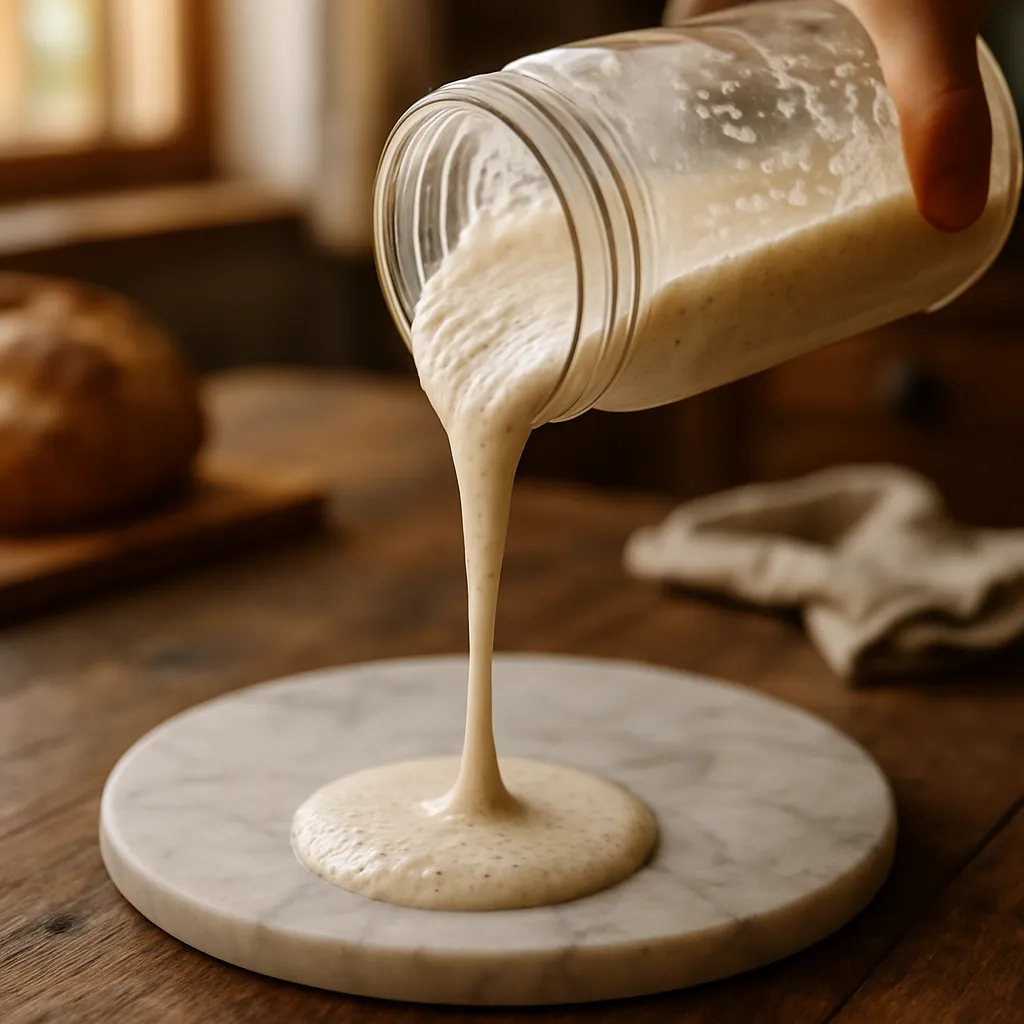
Starter hydration describes the ratio of water to flour in the culture, and it shifts every time a baker feeds it. Nothing about the microbial life inside requires a fixed number — the ratio simply needs to match the loaf a baker wants to bake.
What ratio should a stiff starter use?
There's no single mandatory number. Bakers running a 100% hydration starter can drop toward a firmer feed — sometimes called a stiff starter. Depending on the final product, whether that's a denser rye loaf or a more predictable, slower ferment. The right ratio depends on the baked good, not a rulebook.
To adjust the feeding ratio, follow these steps:
- Note the current feeding ratio (most bakers start at equal parts water and flour by weight).
- Reduce the water portion of the next feeding while keeping flour weight steady.
- Mix thoroughly until the dough-like consistency feels stiff, not pourable.
- Feed at this new ratio consistently for several cycles to let the culture adjust.
- Watch rise speed and aroma before deciding whether to stiffen further.
Bubba Goodcrumb's flagship culture, known for its mild character and gentle tang, offers a forgiving base for this kind of experimentation. Its approachable nature makes it easier to notice how a stiffer feed changes behavior without extreme swings in sourness.
Does water quality affect a stiffer starter?
Yes — water quality matters regardless of ratio. Bernadette's own breakthrough came from discovering that chlorinated tap water was quietly killing her cultures long before hydration ever became the issue. Anyone working through a hydration ratio guide should filter or dechlorinate water first. A stiff feed can't fix a water problem underneath it.
How Does Hydration Affect Sourness and Rise?
Wetter dough ferments faster and produces a milder, tangier balance, while stiffer dough slows fermentation and deepens sourness over time. Starter hydration — the ratio of water to flour feeding a culture — sits at the center of this relationship. Sourdough hydration reveals itself as one of the more nuanced parts of the craft, shaping both flavor and elevator in ways a fixed recipe never fully captures.
Hydration works less like a formula and more like a conversation. Weather nudges fermentation speed. Flour type changes how much water gets absorbed. Kitchen humidity adds another variable entirely. Bakers who adjust starter hydration in response to these shifting conditions gain far more control over sourness and rise than those who chase a single "correct" ratio.
Does higher hydration make sourdough more sour or less sour?
Higher hydration generally favors faster-moving bacteria and yeast activity, which tends to soften sourness and speed up rise. Lower hydration slows fermentation, giving acetic acid-producing bacteria more time to build a sharper, tangier profile. Bakers chasing a milder loaf often loosen their starter's ratio slightly; those craving deep tang stiffen it.
What is a good starting point for hydration ratio guide purposes?
A hydration ratio guide built around equal parts water and flour by weight offers the most reliable baseline for troubleshooting. This balanced approach, often called a 100% hydration starter, keeps fermentation predictable enough to isolate other variables like temperature or feeding schedule.
Bubba Goodcrumb's flagship culture illustrates this balance well. A mild, versatile starter with a gentle tang, shaped by careful feeding habits and consistent hydration. That gentleness didn't happen by accident. Environmental factors matter just as much as ratios. Bernadette Valer's own discovery about water, made after years of baking in Las Vegas, underscores how local conditions steer fermentation outcomes as surely as any recipe number.
What Mistakes Should You Avoid With Hydration?
Hydration mistakes usually start with rushing the ratio or ignoring water quality. Bakers who skip the fundamentals of starter hydration often stall a culture's rise instead of speeding it up. The concept sounds confusing at first glance, but the water-to-flour math becomes manageable once the basic ratio clicks.
One frequent misstep involves diving straight into a 100% hydration starter before the culture has proven stable at a lower ratio. Eager bakers feed equal parts water. Flour right out of the gate, then wonder why the starter turns sluggish and inconsistent. Working up gradually — starting drier and increasing water in small increments. Gives wild yeast and bacteria time to adjust and builds a hardier culture.
A short sequence helps avoid the most common errors:
- Feed at a slightly drier ratio than full hydration for the first several feedings.
- Raise the water content in small steps rather than jumping straight to an even ratio.
- Switch to filtered or dechlorinated water for every single feeding.
- Observe rise time and aroma after each change before adjusting anything else.
- Keep a simple hydration ratio guide on the counter as a quick reference.
Does Tap Water Ruin Starter Hydration?
Untreated tap water quietly undermines even a perfectly measured ratio. Chlorine and heavy minerals can suppress or kill the microbial activity a starter depends on, regardless of how carefully the flour and water were weighed. Bernadette discovered this the hard way after repeated failed attempts traced back to Las Vegas tap water alone.
How Does a Care Guide Help With Hydration?
A detailed care guide removes the guesswork that trips up new bakers. Bubba Goodcrumb pairs every live culture with written instructions covering feeding ratios and troubleshooting. Hydration adjustments come with a clear reference instead of trial and error.
Mastering hydration levels transforms your sourdough journey from guesswork into intentional craft. Whether you're feeding a stiff starter or nurtur
About Bubba Goodcrumb
Sharing practical sourdough guidance from the Bubba Goodcrumb kitchen in Las Vegas.
More from Bubba
Related reading
How to Convert Yeast to Sourdough
Replace commercial yeast with sourdough starter using Bubba Goodcrumb's simple conversion formula. Adjust hydration, extend rise times, and bake with wild.
Revive Sourdough Starter: How to Revive a Dormant Sourdough Starter
Learn how to revive sourdough starter with consistent feeding. Bubba Goodcrumb explains how to bring a dormant culture back to life at home.
How to Revive Sourdough Starter Quickly
Revive a dormant sourdough starter in 3-5 days with consistent daily feedings. Bubba Goodcrumb shows how to rescue neglected starters and get them baking again.